


What is Branding? Complete Guide to Building a Strong Brand
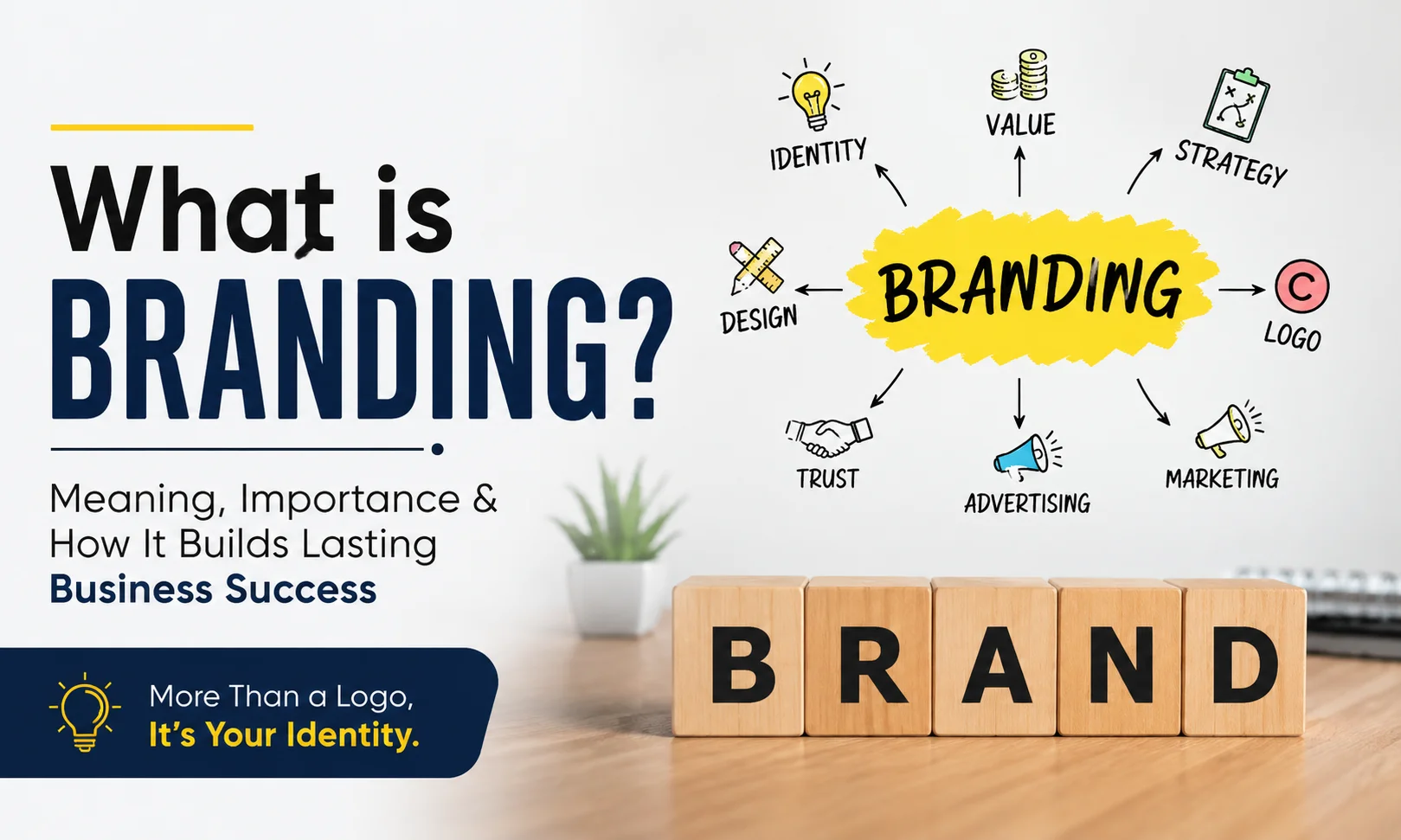
When most people hear the word "branding," they immediately think about logos, colors, or catchy taglines. While these elements certainly play a role, branding is much more than visual design. It is the complete perception people develop about a business through every interaction, whether they visit a website, browse social media, speak with customer support, or use a product. A strong brand influences how customers feel, what they remember, and ultimately whether they choose one business over another.
Having worked with businesses across different industries, we have observed that companies often invest heavily in marketing campaigns while overlooking the foundation that determines whether those campaigns succeed. Businesses with a clear brand identity usually earn customer trust faster, create stronger emotional connections, and achieve better long-term marketing results because every communication feels consistent and authentic.
According to research by Lucidpress, maintaining consistent branding across all customer touchpoints can increase revenue by up to 33 percent. This statistic highlights that branding is not simply a creative exercise. It is a strategic business investment that directly impacts customer loyalty, brand recognition, and profitability. In today's competitive marketplace, where customers compare dozens of options before making purchasing decisions, businesses without a strong brand often struggle to stand out.
This comprehensive guide explains what branding is, why it matters, how it differs from marketing and advertising, the essential elements of successful branding, and practical strategies for building a memorable brand. Whether you are launching a startup, running a local business, or managing an established company, understanding branding will help you create lasting customer relationships and sustainable business growth.
While many businesses understand the importance of branding, developing a consistent brand strategy requires expertise across research, positioning, design, messaging, and customer experience. Working with an experienced Branding Agency can help businesses create a strong brand identity that supports long-term growth and competitive differentiation.
What is Branding?
Branding is the strategic process of creating a unique identity, personality, and perception for a business, product, service, or individual. It combines visual elements, messaging, values, customer experiences, and consistent communication to influence how people recognize, remember, and trust a brand. Rather than focusing on a single logo or advertising campaign, branding shapes the complete experience customers associate with a business.
A brand exists in the minds of customers rather than inside company offices. Every interaction contributes to that perception, including the design of your website, the tone of your emails, the quality of your customer service, your social media presence, and even how employees communicate with customers. Each touchpoint reinforces or weakens the overall brand image.
Imagine walking into an Apple Store. Before speaking with an employee, you immediately notice clean layouts, premium product displays, minimalistic design, and knowledgeable staff. These experiences consistently reinforce Apple's positioning as an innovative and premium technology company. That feeling is branding in action. Customers are not simply buying devices. They are buying confidence, innovation, reliability, and status associated with the Apple brand.
Similarly, brands like Nike, Coca-Cola, Tata, and Amul have built strong identities that extend beyond their products. Customers recognize these companies because they consistently deliver specific emotions, values, and experiences over many years. Their logos represent much more than graphic design because they symbolize trust, quality, and familiarity developed through consistent branding.
Why Branding Matters
Many business owners believe that customers only compare prices before making purchasing decisions. In reality, people often choose brands they recognize and trust, even when lower-priced alternatives are available. Strong branding reduces uncertainty because customers feel confident about what they can expect from a business.
Branding Builds Recognition
Brand recognition develops when customers repeatedly encounter consistent visual identities, messaging, and experiences. Over time, they begin recognizing a business instantly without reading its name. Think about the golden arches of McDonald's or the swoosh of Nike. These symbols have become globally recognizable because of decades of consistent branding rather than simply effective advertising.
Consistent recognition also improves marketing efficiency. Customers who already recognize your brand require less persuasion during future marketing campaigns because familiarity naturally increases trust. Research published by Edelman consistently shows that trust significantly influences purchasing decisions across industries, making recognition one of branding's greatest advantages.
Branding Creates Trust
Trust is one of the most valuable assets any business can develop. Customers are often hesitant to purchase from unfamiliar companies because they cannot predict product quality or service standards. Strong branding reduces this uncertainty by communicating professionalism, reliability, and consistency through every customer interaction.
For example, imagine searching for a digital marketing agency online. Two agencies offer similar services at similar prices. One agency has a professional website, consistent visual identity, detailed case studies, active social media profiles, and authentic customer testimonials. The other agency has inconsistent branding and limited online presence. Most customers naturally trust the first agency because its branding signals credibility before any direct conversation takes place.
Branding Increases Customer Loyalty
Acquiring new customers usually costs significantly more than retaining existing ones. Strong branding encourages repeat purchases because customers develop emotional connections with businesses that consistently meet expectations. They become advocates who recommend brands to family members, friends, and colleagues without additional advertising expenses.
Loyal customers also become less sensitive to price changes because they perceive greater value in familiar brands. Instead of comparing every available option, they continue purchasing from companies they trust. This long-term loyalty creates stable revenue and reduces dependence on constant customer acquisition campaigns.
Branding Supports Premium Pricing
Many premium brands charge considerably higher prices than competitors while maintaining strong customer demand. This pricing advantage rarely comes from product features alone. Customers willingly pay more because they associate premium brands with superior quality, reliability, status, or exceptional experiences.
Luxury brands such as Rolex, Louis Vuitton, and Mercedes-Benz demonstrate how branding influences perceived value. Their products satisfy functional needs, but customers often purchase them because the brand communicates prestige, craftsmanship, and exclusivity.
Branding Creates Competitive Advantage
Modern markets are increasingly crowded with businesses offering similar products and services. Branding helps companies differentiate themselves by communicating unique values, expertise, customer experiences, and emotional benefits rather than competing solely on price.
Businesses that invest in branding create memorable identities that competitors cannot easily replicate. While products, pricing, and marketing strategies can change quickly, customer perception developed through years of consistent branding becomes a sustainable competitive advantage.
The Evolution of Branding
Branding has existed for thousands of years, although its purpose has evolved dramatically over time. Ancient civilizations used symbols and markings to identify ownership of livestock, pottery, and handcrafted goods. These marks helped buyers recognize the origin of products and distinguish one craftsman's work from another.
During the Industrial Revolution, mass production increased competition among manufacturers. Companies began creating distinctive product names, packaging, and visual identities to differentiate themselves in growing marketplaces. Branding gradually shifted from simple identification toward building customer preference and loyalty.
The twentieth century introduced television, radio, newspapers, and large-scale advertising campaigns that transformed branding into a strategic discipline. Companies invested heavily in logos, slogans, storytelling, and emotional messaging to create stronger customer relationships beyond functional product benefits.
Today's digital landscape has expanded branding even further. Websites, mobile applications, online reviews, influencer marketing, search engines, artificial intelligence, and social media all contribute to brand perception. Customers now evaluate businesses across dozens of digital touchpoints before making purchasing decisions, making consistency more important than ever before.
Brand vs Branding
Although these terms are frequently used interchangeably, they represent different concepts that every business owner should understand.
A brand is the perception customers hold about your business. It exists in their minds based on experiences, emotions, and memories developed through interactions with your company.
Branding, on the other hand, is the ongoing process of intentionally shaping that perception through strategic decisions, communication, design, customer experiences, and consistent messaging.
Think about your personal reputation. Your reputation represents how others perceive you, while your daily actions continuously shape that reputation. Branding works exactly the same way. Every decision a business makes contributes to its overall brand.
Branding vs Marketing
Branding and marketing work closely together, but they serve different purposes. Confusing these concepts often leads businesses to focus on short-term campaigns while neglecting long-term brand development.
Branding answers the question, "Who are we?" Marketing answers the question, "How do we reach customers?"
Branding establishes identity, values, positioning, personality, and emotional connections. Marketing promotes products and services through various channels to generate awareness, leads, and sales. Without branding, marketing campaigns may attract attention but fail to create lasting customer relationships.
For example, a digital marketing agency might launch Google Ads, social media campaigns, email newsletters, and SEO strategies. These activities represent marketing. However, the consistent messaging, visual identity, customer experience, expertise, and reputation that customers remember after interacting with the agency represent branding.
Businesses achieve the strongest results when branding and marketing support one another. Effective marketing introduces customers to a business, while effective branding gives them compelling reasons to stay loyal.
Branding vs Advertising
Advertising represents only one component of marketing, while branding forms the foundation that gives advertising purpose and consistency.
Advertising involves paying to promote products or services through channels such as Google Ads, Meta Ads, television commercials, newspapers, outdoor billboards, or influencer collaborations. Its primary objective is generating awareness, leads, or immediate sales.
Branding extends far beyond paid promotions. It influences how advertisements look, sound, and make customers feel. A well-branded business creates advertisements that customers instantly recognize because every campaign reflects consistent messaging, visual identity, and values.
Imagine two coffee shops running identical Facebook advertisements. One has established a warm, community-focused brand with consistent photography, storytelling, customer experiences, and visual identity. The other changes its messaging, colors, and tone frequently. Even if both spend the same advertising budget, the first business will usually achieve stronger long-term results because branding increases familiarity and trust before customers click the advertisement.
In simple terms, advertising encourages customers to notice your business, while branding ensures they remember your business long after the advertisement disappears.
Core Elements of Branding
Successful branding is built on several interconnected elements that work together to create a consistent and memorable experience for customers. Many businesses focus only on designing an attractive logo, but visual identity alone cannot build a strong brand. Every interaction, message, and customer experience contributes to how people perceive a business. When these elements remain consistent across all touchpoints, customers begin associating the brand with specific emotions, values, and expectations.
Brand Name
A brand name is often the first interaction customers have with a business, making it one of the most valuable branding assets. An effective brand name should be memorable, easy to pronounce, relevant to the business, and flexible enough to support future growth. Companies such as Apple, Google, Amazon, and Nike have simple names that are instantly recognizable because they consistently deliver value and positive experiences alongside their branding.
Choosing a brand name should involve more than creativity. Businesses should consider domain availability, trademark protection, cultural meanings, and long-term scalability before making a final decision. A name that works well today should continue supporting the company's vision as it expands into new markets or services.
Logo
A logo is the visual symbol that helps customers identify a business quickly, but it should never be confused with the brand itself. A professionally designed logo supports brand recognition by creating visual consistency across websites, packaging, social media profiles, advertisements, and marketing materials. However, even the most attractive logo cannot compensate for poor customer experiences or inconsistent messaging.
Many of the world's most recognizable logos are surprisingly simple. The Nike swoosh, Apple's bitten apple, and McDonald's golden arches demonstrate that simplicity often improves recognition. These symbols have gained value because customers consistently associate them with specific experiences rather than because of their artistic complexity.
Color Palette
Colors play a significant role in influencing emotions and strengthening brand recognition. Research conducted by the University of Loyola suggests that consistent use of color can significantly improve brand recognition among consumers. While color psychology should not be treated as an exact science, carefully selected colors help reinforce the personality and positioning of a brand.
For example, blue is commonly associated with trust and reliability, which explains why many financial institutions and technology companies use it extensively. Green often represents growth, sustainability, and health, making it popular among wellness and environmental brands. Red communicates excitement, urgency, and passion, making it effective for food, retail, and entertainment businesses.
Businesses should establish a consistent primary and secondary color palette that appears across websites, presentations, packaging, social media content, and advertising campaigns. Consistency helps customers recognize the brand instantly regardless of where they encounter it.
Typography
Typography refers to the fonts and text styles used throughout a brand's communication. Although typography may seem like a minor design decision, it significantly influences readability, professionalism, and overall perception. Elegant serif fonts often communicate tradition and luxury, while modern sans-serif fonts frequently represent simplicity, innovation, and accessibility.
Every brand should define a primary heading font, a body text font, and clear usage guidelines to ensure consistency across both digital and printed materials. Inconsistent typography creates a fragmented customer experience that weakens overall brand identity.
Brand Voice and Messaging
Visual consistency attracts attention, but words build relationships. Brand voice defines how a business communicates with customers across websites, emails, advertisements, blogs, customer support, and social media platforms. Some brands communicate in a formal and authoritative manner, while others prefer a conversational and friendly tone.
A consistent brand voice helps customers recognize content even before they notice the company logo. Whether publishing an Instagram caption, responding to customer inquiries, or writing a blog article, businesses should maintain the same personality and communication style across every platform.
Messaging goes beyond tone. It includes the key promises, value propositions, mission statements, and core beliefs that explain why the business exists and why customers should trust it. Strong messaging creates clarity and ensures that every marketing activity reinforces the same positioning.
Mission, Vision, and Core Values
Successful brands communicate more than products and services. They explain what they stand for, what future they want to create, and the principles that guide every business decision. These three components help customers understand the purpose behind the company.
A mission statement explains the organization's current purpose and the value it delivers today. A vision statement describes the long-term future the business hopes to create. Core values define the behaviors and beliefs that influence daily decisions, customer interactions, and company culture.
Modern consumers increasingly support businesses whose values align with their own. According to multiple consumer behavior studies, transparency, authenticity, and social responsibility continue influencing purchasing decisions across many industries. Businesses that consistently demonstrate their values often build stronger emotional connections than those focusing only on products.
Customer Experience
Customer experience is one of the most influential yet overlooked components of branding. Every interaction shapes customer perception, including website navigation, response times, service quality, delivery experience, complaint resolution, and after-sales support.
Two businesses may offer identical products at similar prices, but customers often remember the company that provided a smoother and more enjoyable experience. Positive experiences encourage repeat purchases, online reviews, and word-of-mouth referrals, all of which strengthen brand reputation over time.
Brands such as Amazon have demonstrated that convenience, reliability, and customer-focused processes can become defining characteristics of the brand itself. Customers return not only because of the products but because they trust the overall experience.
Consistency
Consistency is the foundation that connects every branding element. A beautifully designed logo loses effectiveness if the website uses different colors, social media follows a different tone, and advertisements communicate conflicting messages. Customers trust brands that behave predictably because consistency reduces uncertainty and reinforces familiarity.
Brand consistency requires documented guidelines covering logo usage, typography, colors, photography style, messaging, tone of voice, and customer communication standards. As businesses grow, these guidelines help maintain a unified identity across different departments, agencies, and marketing channels.
Types of Branding
Branding is not limited to large corporations. Different types of branding help businesses, professionals, organizations, and even cities establish unique identities. Understanding these categories allows businesses to develop strategies that align with their specific objectives.
Corporate Branding
Corporate branding focuses on the overall identity and reputation of an entire organization rather than individual products or services. Companies such as Tata, Infosys, and Google invest heavily in corporate branding because customers associate the company's values and reputation with everything it offers.
Strong corporate branding increases investor confidence, attracts talented employees, and strengthens customer trust across multiple product categories.
Product Branding
Product branding creates unique identities for individual products within a larger company portfolio. Procter & Gamble manages brands such as Tide, Ariel, Gillette, and Pampers, each with distinct positioning and target audiences despite belonging to the same parent organization.
This approach enables businesses to target different market segments without affecting the reputation of the parent company.
Personal Branding
Personal branding focuses on building the reputation of an individual rather than a business. Entrepreneurs, consultants, creators, speakers, authors, and executives increasingly invest in personal branding through websites, LinkedIn profiles, podcasts, videos, public speaking, and thought leadership content.
A strong personal brand builds credibility, attracts career opportunities, and creates trust before direct conversations even begin. In today's digital environment, many customers evaluate the people behind businesses before making purchasing decisions.
Employer Branding
Employer branding influences how potential employees perceive a company as a workplace. Organizations with strong employer brands often attract higher-quality talent while reducing recruitment costs because professionals actively seek employment with respected companies.
Positive workplace culture, employee development opportunities, transparent leadership, and authentic employee stories all contribute to successful employer branding.
Digital Branding
Digital branding refers to how businesses present themselves across websites, search engines, social media platforms, email marketing, mobile applications, and online advertising. Since many customer journeys begin online, digital branding has become one of the most important aspects of modern business strategy.
Every digital interaction should reinforce the same identity, visual style, messaging, and customer experience to strengthen overall brand perception.
Service Branding
Unlike physical products, services cannot be experienced before purchase. Service branding therefore relies heavily on trust, expertise, communication, customer experience, and reputation. Professional service providers such as marketing agencies, law firms, hospitals, and consulting companies build their brands by consistently delivering exceptional experiences rather than tangible products.
Luxury Branding
Luxury branding emphasizes exclusivity, premium quality, craftsmanship, heritage, and status. Rather than competing on price, luxury brands focus on creating aspiration and emotional value. Companies such as Rolex, Hermès, and Rolls-Royce carefully control their messaging, distribution, and customer experience to maintain exclusivity and perceived value.
The Branding Process: How to Build a Brand Step by Step
Building a successful brand is not a one-time creative project. It is an ongoing strategic process that requires research, planning, execution, and continuous improvement. Businesses that invest time in creating a clear branding strategy often achieve stronger customer loyalty, better marketing performance, and higher long-term business value than those that make branding decisions without a defined framework.
Although every business follows its own journey, most successful brands develop through a series of structured steps that ensure consistency across every customer touchpoint.
Step 1: Define Your Purpose
Every memorable brand begins with a clear purpose that extends beyond making profits. Customers increasingly support businesses that solve meaningful problems, improve lives, or contribute positively to society. Defining your purpose helps every future branding decision remain aligned with your long-term vision.
Ask questions such as why your business exists, what problems it solves, who benefits from your services, and how you want customers to describe your business after interacting with it. These answers become the foundation of your mission, vision, and overall brand strategy.
Step 2: Understand Your Target Audience
Branding becomes much more effective when businesses understand exactly who they are trying to serve. Different audiences have different expectations, communication preferences, purchasing behaviors, and emotional triggers. Creating branding that appeals to everyone usually results in messaging that resonates with no one.
Conduct customer research through surveys, interviews, website analytics, search data, and social media insights. Identify demographic information, professional backgrounds, purchasing motivations, pain points, and decision-making factors. This information helps create messaging that feels relevant rather than generic.
Step 3: Research Your Competitors
Competitor research is not about copying successful businesses. It is about identifying opportunities to differentiate your brand in meaningful ways. Analyze competitors' websites, visual identities, messaging, pricing strategies, customer reviews, and social media content to understand their positioning.
Pay close attention to gaps that competitors have overlooked. Those gaps often become opportunities for your brand to stand out by offering a better customer experience, clearer communication, stronger expertise, or a unique perspective.
Step 4: Create Your Brand Positioning
Brand positioning defines the unique space your business occupies in customers' minds. Effective positioning clearly communicates who you serve, what you offer, why you are different, and why customers should choose you instead of competitors.
Strong positioning remains simple and consistent. Customers should understand your value proposition within seconds of visiting your website or viewing your marketing materials.
Step 5: Develop Your Visual Identity
Once positioning has been established, businesses can begin designing the visual components that represent their brand. This includes logos, colors, typography, photography style, icons, illustrations, presentation templates, and marketing assets.
Visual identity should reinforce the personality of the brand rather than simply following design trends. Every visual decision should support the emotions and values the business wants customers to associate with the brand.
Step 6: Build Consistent Messaging
Brand messaging explains what the business stands for and why customers should care. It includes headlines, website copy, taglines, elevator pitches, service descriptions, social media captions, and customer communication guidelines.
Consistency is critical because customers interact with brands through multiple channels before making purchasing decisions. Similar language, tone, and messaging across every platform strengthen familiarity and trust.
Step 7: Deliver Consistent Customer Experiences
Brand promises only become meaningful when supported by customer experiences. Businesses should evaluate every stage of the customer journey, including discovery, inquiries, purchasing, onboarding, service delivery, follow-up communication, and ongoing support.
Positive experiences reinforce branding while negative experiences quickly damage trust regardless of how attractive a company's marketing materials may appear.
Step 8: Measure and Improve
Branding should evolve alongside customer expectations and market conditions. Regularly monitor customer feedback, online reviews, social media conversations, website analytics, brand awareness, and customer retention metrics to identify improvement opportunities.
Strong brands continuously refine their messaging, positioning, and customer experiences without abandoning the core identity customers already recognize.
Brand Positioning Explained
Brand positioning determines how customers perceive your business compared with competitors. It defines the unique value your company delivers and the reason customers should remember your brand instead of dozens of alternatives.
Positioning does not depend solely on product quality. It combines expertise, customer experience, communication, emotional appeal, pricing, innovation, and reputation to create a distinct place in the marketplace.
For example, Volvo positions itself around safety. Apple focuses on innovation and premium user experience. Nike emphasizes motivation and athletic achievement. These companies sell products, but customers remember them because of the ideas consistently associated with their brands.
An effective positioning statement generally answers four important questions.
- Who is your target audience?
- What problem do you solve?
- What makes you different?
- Why should customers trust you?
Businesses that answer these questions clearly often create stronger marketing campaigns because every advertisement, website page, and social media post reinforces the same message.
Brand Identity vs Brand Image
Although these terms sound similar, they describe two different aspects of branding.
Brand identity represents how a business wants customers to perceive it. It includes visual identity, messaging, tone of voice, mission, values, positioning, and customer experience designed intentionally by the company.
Brand image represents how customers actually perceive the business after interacting with it. Brand image develops through personal experiences, online reviews, recommendations, customer service, product quality, and marketing communication.
Successful branding minimizes the gap between identity and image. When businesses consistently deliver on their promises, customers begin perceiving the brand exactly as intended.
Brand Personality
People naturally connect with personalities rather than companies. Brand personality gives businesses human characteristics that customers can relate to emotionally.
Marketing professor David Aaker introduced one of the most widely recognized brand personality frameworks, which categorizes personalities into five dimensions.
Sincerity
Brands with sincere personalities appear honest, genuine, caring, and trustworthy. Companies focused on family values, community support, or customer relationships often adopt this personality.
Excitement
Exciting brands communicate energy, innovation, creativity, and adventure. Technology companies, sports brands, and entertainment businesses frequently use this personality to attract younger audiences.
Competence
Competent brands emphasize expertise, intelligence, reliability, and professionalism. Financial institutions, healthcare providers, consulting firms, and technology companies often position themselves around competence.
Sophistication
Sophisticated brands represent elegance, luxury, prestige, and premium quality. High-end fashion, luxury hotels, and premium automotive brands commonly use this positioning.
Ruggedness
Rugged brands communicate strength, durability, resilience, and adventure. Outdoor equipment companies, pickup truck manufacturers, and adventure travel brands often embrace this personality.
Choosing one primary personality helps maintain consistency across every communication channel while making the brand easier for customers to remember.
Brand Voice
Brand voice defines how a business communicates with its audience. While visual identity helps customers recognize a brand instantly, voice helps customers recognize the company through language alone.
A strong brand voice should remain consistent across websites, blogs, email campaigns, advertisements, customer support interactions, presentations, and social media posts. Frequent changes in tone create confusion and weaken overall brand recognition.
Businesses commonly adopt one of several communication styles.
- Professional and authoritative
- Friendly and conversational
- Inspirational and motivational
- Educational and informative
- Playful and humorous
- Premium and sophisticated
For example, LinkedIn generally communicates professionally, while Spotify often uses casual and entertaining language. Both approaches work because they remain consistent with each company's audience and positioning.
Before publishing content, businesses should establish clear writing guidelines covering vocabulary, sentence structure, tone, preferred terminology, and communication principles. These guidelines become especially valuable as marketing teams grow.
Emotional Branding
Customers rarely make purchasing decisions based purely on logic. Research in behavioral psychology consistently demonstrates that emotions influence buying behavior before rational thinking justifies the final decision.
Emotional branding focuses on creating meaningful relationships rather than promoting product features alone. Businesses that successfully connect with customers emotionally often enjoy stronger loyalty, higher customer retention, and more referrals.
Consider why people proudly wear Nike shoes, recommend Apple products, or support Tata businesses. Their decisions often involve trust, inspiration, familiarity, and shared values rather than technical specifications alone.
Businesses can strengthen emotional branding by understanding customer aspirations, fears, frustrations, and motivations. Marketing messages should explain how products improve lives instead of simply listing features.
Authentic storytelling, community involvement, personalized customer experiences, and consistent service quality all contribute to stronger emotional connections.
Brand Storytelling
Every successful brand tells a story that helps customers understand its purpose and values. Storytelling transforms businesses from product providers into relatable organizations with missions, challenges, and meaningful journeys.
Effective brand stories generally include several key elements.
The beginning explains why the business was created.
The middle introduces the problem customers face.
The solution demonstrates how the business helps solve that problem.
The ending focuses on customer success rather than company achievements.
This structure shifts attention from the business toward the customer's transformation, making stories more engaging and memorable.
For example, Airbnb rarely markets itself as a booking platform. Instead, it tells stories about belonging, meaningful travel experiences, and connecting people across cultures. Those emotional narratives strengthen the brand far more effectively than listing accommodation features alone.
Businesses should incorporate storytelling into websites, case studies, blogs, social media content, video marketing, presentations, and customer testimonials. Authentic stories build credibility because they demonstrate real outcomes rather than making unsupported marketing claims.
How to Build a Strong Brand from Scratch
Building a memorable brand requires patience, consistency, and strategic thinking rather than large advertising budgets. Even small businesses with limited resources can establish strong brands by focusing on clarity and customer experience.
Begin by defining your purpose, mission, vision, and target audience before designing any visual assets. These strategic decisions guide every future branding activity and help maintain consistency as the business grows.
Invest in professional visual identity elements that accurately represent your positioning. A well-designed logo, consistent color palette, typography, photography style, and website create a strong first impression that supports credibility.
Develop clear messaging that communicates your value proposition within seconds. Customers should immediately understand what your business offers, who it serves, and why it is different from competitors.
Deliver exceptional customer experiences consistently across every interaction. Strong branding cannot compensate for poor service, delayed responses, or broken promises. Customer experiences ultimately determine whether branding efforts succeed.
Finally, remain consistent over time. Building a recognizable brand rarely happens within weeks or months. It requires repeated positive experiences that gradually strengthen customer trust, increase recognition, and establish long-term loyalty.
Branding for Small Businesses
Many small business owners believe branding is only important for multinational companies with large marketing budgets. In reality, branding often has a greater impact on small businesses because they need to establish credibility quickly while competing against well-known brands. A clear and consistent brand helps smaller businesses earn trust before customers even make their first purchase.
One of the biggest advantages small businesses have is authenticity. Customers increasingly prefer businesses that communicate honestly, share their journey, and build genuine relationships with their audience. A small café, local clothing store, digital marketing agency, or home service business can create a memorable brand by consistently delivering quality experiences and communicating a clear purpose.
Small businesses should begin by identifying their unique value proposition instead of trying to compete solely on price. Whether it is exceptional customer service, faster delivery, specialized expertise, or personalized support, that unique strength should become the foundation of every branding decision. Customers are more likely to remember businesses that stand for something meaningful.
Consistency should also remain a priority even with limited resources. The same logo, colors, messaging, and tone of voice should appear across websites, Google Business Profiles, social media platforms, invoices, presentations, and packaging. This consistency strengthens recognition and creates a more professional impression.
Another effective strategy is encouraging satisfied customers to share reviews, testimonials, and success stories. According to BrightLocal's Local Consumer Review Survey, online reviews continue to influence purchasing decisions for a significant percentage of consumers. Positive customer experiences reinforce brand credibility far more effectively than self-promotional advertising.
Branding for Startups
Startups often focus heavily on product development while postponing branding until later stages of growth. Although building a great product is essential, early branding helps attract investors, customers, employees, and business partners who share the company's vision.
Startup branding should begin with a clear understanding of the problem being solved and the audience being served. Instead of creating complex visual identities immediately, founders should focus on defining their purpose, positioning, messaging, and customer experience. These strategic foundations make future branding decisions much easier.
Many successful startups launched with relatively simple visual identities but communicated powerful ideas consistently. Airbnb positioned itself around belonging rather than accommodation. Slack focused on simplifying workplace communication instead of promoting software features. These brands succeeded because they communicated emotional value rather than technical specifications.
Startups should also remain flexible. Branding should evolve as customer feedback, market conditions, and business goals change. However, flexibility should never compromise the core purpose or values that define the company's identity.
Common Branding Mistakes Businesses Should Avoid
Even experienced businesses occasionally make branding mistakes that reduce customer trust and weaken market positioning. Recognizing these mistakes early helps organizations maintain stronger relationships with their audience.
Inconsistent Brand Identity
Using different colors, fonts, logos, or messaging across multiple platforms creates confusion. Customers should experience the same brand personality whether they visit your website, social media profiles, email newsletters, or physical office.
Trying to Appeal to Everyone
Brands that attempt to satisfy every possible audience often fail to connect deeply with anyone. Clearly defining a target audience allows businesses to create more relevant messaging, stronger positioning, and better customer experiences.
Competing Only on Price
Businesses that rely entirely on discounts often struggle to build long-term loyalty because competitors can easily offer lower prices. Strong branding shifts customer attention from price toward value, expertise, trust, and experience.
Ignoring Customer Experience
No amount of marketing can compensate for poor customer service. Slow responses, broken promises, confusing websites, or inconsistent support quickly damage brand reputation regardless of advertising budgets.
Copying Competitors
Studying competitors is valuable, but imitation rarely creates differentiation. Customers remember brands that communicate original ideas, authentic values, and unique experiences rather than businesses that look identical to everyone else.
Failing to Evolve
Branding should remain consistent while adapting to changing customer expectations and market trends. Businesses that refuse to modernize risk becoming less relevant over time.
Real-World Branding Examples
Studying successful brands demonstrates how consistent branding influences customer perception and long-term business growth.
Apple
Apple positions itself around innovation, simplicity, and premium user experiences. Every aspect of the brand, including product design, retail stores, packaging, advertising, and customer support, reinforces these values. Customers purchase Apple products because they trust the complete experience rather than individual technical specifications.
Nike
Nike has built one of the world's strongest emotional brands by focusing on inspiration instead of footwear. Its famous slogan, "Just Do It," encourages determination, ambition, and personal achievement. Through storytelling and athlete partnerships, Nike sells motivation alongside its products.
Tata
Tata represents trust, reliability, ethics, and nation-building across diverse industries. Whether customers interact with Tata Motors, Tata Steel, Tata Consumer Products, or Tata Consultancy Services, they associate the company with integrity and long-term value.
Zomato
Zomato has developed a modern, conversational brand personality that resonates strongly with younger audiences. Its witty social media content, user-friendly application, and consistent communication style have transformed the company from a food delivery platform into a recognizable lifestyle brand.
Amul
Amul demonstrates the power of consistent messaging through its long-running topical advertising campaigns. For decades, the Amul Girl has commented on current events with humor while reinforcing the brand's approachable and memorable personality.
Airbnb
Airbnb focuses on belonging rather than accommodation. Its branding emphasizes authentic travel experiences, community, and meaningful connections between hosts and travelers. This emotional positioning differentiates Airbnb from traditional hotel chains.
Branding in the AI Era
Artificial intelligence is transforming how businesses create content, analyze customer behavior, personalize experiences, and automate marketing activities. However, despite these technological advances, branding has become even more important because AI tools are increasingly available to everyone.
Many businesses now use AI to generate blog articles, advertising copy, images, customer support responses, and social media content. While these tools improve efficiency, they also increase the amount of similar content available online. Strong branding helps businesses maintain originality in an environment where generic content is becoming increasingly common.
Customers still value authenticity, expertise, and human experiences. AI can support branding by improving productivity, analyzing customer data, and generating creative ideas, but it cannot replace genuine relationships, original experiences, or authentic company values.
Businesses should therefore use AI as an assistant rather than allowing it to define their brand identity. Human creativity, customer understanding, and strategic thinking remain essential components of memorable branding.
The Future of Branding
Branding will continue evolving as technology, customer expectations, and communication channels change. Businesses that adapt while maintaining consistent values will remain competitive in the years ahead.
Personalization will become increasingly important. Customers expect brands to understand their preferences and deliver relevant experiences without sacrificing privacy or trust.
Video content will continue strengthening brand communication because people increasingly consume visual content across social media, websites, and streaming platforms. Professional videography and authentic storytelling will become even more valuable for businesses seeking stronger customer engagement.
Voice search, conversational AI, augmented reality, and immersive digital experiences will also influence how customers interact with brands. Companies should prepare for these technologies while ensuring every new experience reinforces their existing identity.
Community building will become another major competitive advantage. Businesses that encourage conversations, user-generated content, customer participation, and long-term relationships will likely outperform companies focused only on short-term sales.
Regardless of technological advances, the core principles of branding will remain unchanged. Customers will continue choosing businesses they trust, remember, and emotionally connect with.
Conclusion
Branding is far more than a logo or an attractive visual identity. It is the complete experience customers associate with a business after every interaction, whether online or offline. Every conversation, advertisement, website visit, customer support request, and product experience contributes to shaping that perception over time.
The strongest brands are built through consistency rather than occasional marketing campaigns. Businesses that communicate a clear purpose, understand their audience, deliver exceptional customer experiences, and maintain consistent messaging naturally earn higher levels of trust, recognition, and loyalty. These advantages not only improve customer relationships but also strengthen long-term business growth.
As digital competition continues increasing, branding will become one of the most valuable business assets. Products can be copied, prices can change, and technologies will continue evolving, but a trusted brand remains difficult to replicate. Companies that invest in strategic branding today will be better positioned to attract customers, retain loyalty, and adapt successfully to future market changes.
Whether you are launching a startup, growing a small business, or strengthening an established company, branding should never be viewed as an optional marketing activity. It is the foundation that gives every marketing effort greater impact and every customer interaction lasting meaning.